
What Is the Role of Mitochondria in Autism and Cognitive Health?
Last Updated: November 2025
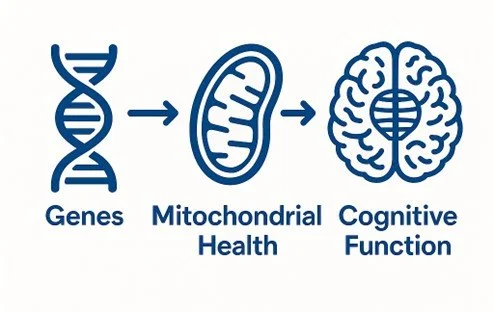
Dr. Jessica Knape of HealthSpan Internal Medicine in Boulder, CO, discusses how weakened mitochondrial function affects brain energy, focus, and emotional regulation. She highlights mitochondria as a shared link between autism and cognitive decline, and a key target for restoring and protecting long-term brain health.
Mitochondria — the tiny “power plants” inside our cells — are responsible for converting oxygen and nutrients into energy (ATP).
They’re also one of the most sensitive systems in the body, especially in the brain, where energy demand is constant.
In both autism and cognitive decline, mitochondrial function plays a central role.
When these organelles are underperforming — due to genetics, inflammation, or toxins — the brain loses its capacity to maintain focus, repair, and regulate emotion.
At HealthSpan Internal Medicine in Boulder, CO, we often see mitochondrial health as the hidden link between neurodevelopment and neurodegeneration — and as one of the most hopeful targets for recovery and prevention.
HealthSpan Insight
Mitochondria power every neuron; dysfunction can lead to attention, mood, or learning difficulties in childhood and memory loss later in life.
In autism, mitochondrial deficits are found in up to 50% of cases, often driven by inflammation, oxidative stress, or nutrient deficiencies.
Supporting mitochondrial repair improves focus, energy, sleep, and cognitive resilience across the lifespan.
1. Mitochondria: The Brain’s Energy Network
The brain consumes about 20% of the body’s energy — yet has minimal energy storage.
That means neurons depend on mitochondria to produce ATP continuously, especially for:
Electrical signaling between cells
Neurotransmitter synthesis (dopamine, serotonin, GABA)
Detoxification and antioxidant protection
Cellular repair and neuroplasticity
When mitochondria struggle, the first organs to feel it are the brain and muscles — leading to fatigue, cognitive fog, and sensory overload.
2. Mitochondrial Dysfunction in Autism
Multiple studies show that children and adults with autism have higher rates of mitochondrial dysfunction — meaning their cells produce less ATP and more oxidative stress.
Common findings include:
Elevated lactate and pyruvate ratios (markers of inefficient metabolism)
Abnormal carnitine or coenzyme Q10 levels
Reduced antioxidant enzymes like glutathione peroxidase
These imbalances impair neuronal signaling and can amplify sensory or behavioral symptoms.
Why this matters:
The same metabolic bottlenecks that cause early-life challenges may predispose to cognitive vulnerability later in life — unless mitochondrial health is restored and maintained.
3. Mitochondria, Autism, and Inflammation
Inflammation and mitochondrial damage form a vicious cycle.
When inflammation increases (from infection, toxins, or chronic stress), mitochondria produce more free radicals (ROS).
In turn, oxidative stress further damages mitochondrial DNA (mtDNA), reducing ATP output and triggering more inflammation.
This loop — called mitochondrial inflammatory feedback — is seen in both autism and Alzheimer’s disease.
Interrupting that loop with antioxidants, nutrient cofactors, and stress modulation is one of the most effective neuroprotective strategies available.
4. Mitochondria and Cognitive Decline
In aging, mitochondrial decline is one of the earliest hallmarks of neurodegeneration.
When ATP output drops, neurons lose electrical stability and begin accumulating toxic proteins (like beta-amyloid and tau).
This process contributes to:
“Brain energy gap” in Alzheimer’s disease
Slowed processing speed and memory retrieval
Fatigue, apathy, and depression in older adults
Supporting mitochondrial function can slow or even partially reverse this energy deficit, improving attention, memory, and mood.
5. Key Nutrients for Mitochondrial Health
Mitochondria rely on dozens of nutrients to function optimally.
Some of the most evidence-based supports include:
A. Coenzyme Q10 (Ubiquinol) — an essential cofactor in ATP production; improves cellular oxygen use and energy.
B. Acetyl-L-Carnitine — transports fatty acids into mitochondria for fuel; supports focus, memory, and nerve health.
C. Magnesium, B2 (Riboflavin), and B3 (Niacinamide) — essential for mitochondrial enzymes; deficiencies impair energy production.
D. Alpha-Lipoic Acid — antioxidant that recycles glutathione and reduces oxidative stress.
E. Omega-3 Fatty Acids — improve mitochondrial membrane fluidity and signaling.
F. Creatine and NAD+ Precursors (such as NMN or nicotinamide riboside) — support ATP synthesis and cellular repair.
6. Mitochondria, Hormones, and Brain Health
Mitochondria regulate not only energy but also hormone signaling — including estrogen, thyroid, and cortisol metabolism.
This is one reason women in perimenopause may experience cognitive dips: reduced estrogen leads to decreased mitochondrial efficiency.
Optimizing hormones (within physiological ranges) helps preserve brain metabolism and prevent cognitive decline.
7. Lifestyle Support for Mitochondrial Repair
In addition to targeted nutrients, lifestyle factors are equally critical:
Movement: Moderate aerobic and resistance exercise triggers mitochondrial biogenesis — the creation of new mitochondria.
Sleep: Deep sleep repairs mitochondrial DNA and clears metabolic debris.
Nutrition: Anti-inflammatory diets rich in vegetables, fish, olive oil, and polyphenols protect mitochondria.
Stress regulation: Meditation, breathwork, and connection lower cortisol and oxidative load.
Each small improvement strengthens the brain’s long-term energy capacity.
8. The Autism–Dementia Continuum: Energy as a Common Language
Autism and dementia sit on opposite ends of the lifespan but share a central vulnerability: energy dysregulation.
Supporting mitochondrial efficiency early in life not only improves function now — it may also protect against neurodegeneration decades later.
For both conditions, mitochondria are not just “engines”; they are information processors that translate metabolism, immunity, and emotion into long-term brain function.
When you care for your mitochondria, you care for your future self.
Bottom Line
Mitochondria are the foundation of brain health.
In autism, they influence learning, focus, and regulation; in dementia, they determine how well neurons age and repair.
By supporting mitochondrial energy through nutrition, movement, and stress balance, we can improve quality of life now — and safeguard cognition for the decades ahead.
At HealthSpan Internal Medicine, we integrate metabolic testing, nutrient repletion, and functional movement into personalized Brainspan Blueprint programs to help every patient power their mind, energy, and connection from the cellular level up.
Schedule a Brain & Nutritional Optimization Evaluation with Dr. Knape to assess mitochondrial function, metabolic biomarkers, and individualized strategies that support cellular energy, redox balance, and brain health.
Ready to take action for your brain health?
👉 Join the 12-week Brainspan Bootcamp and start building lifelong brain resilience
Sources
The multifaceted role of mitochondria in autism spectrum disorder - PubMed
Autism Spectrum Disorders: The Mitochondria Connection - NCBI
Medically reviewed by
Dr. Jessica Knape, MD, MA Board Certified in Internal Medicine and Integrative and Holistic Medicine
Healthspan Internal Medicine — serving patients in Boulder, CO
Book a Discovery Call | About Dr. Knape
This content is for educational purposes and does not replace personalized medical advice.
