
What Are the Best Ways to Improve Balance and Prevent Falls Naturally?
Last Updated: December 2025
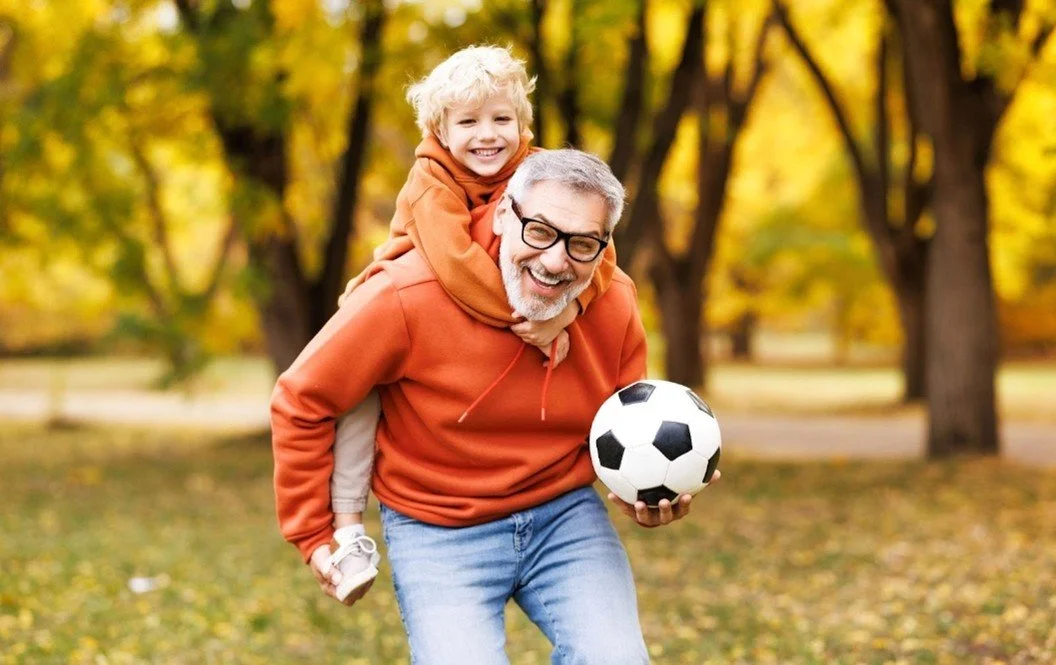
Dr. Jessica Knape of HealthSpan Internal Medicine in Boulder, CO, explains that falls are not just mobility issues but signs of disrupted communication between the feet, eyes, inner ear, and brain. She emphasizes that balance can be trained at any age, and improving it supports safety, independence, confidence, and long-term brain health.
Most people think of falls as a “mobility problem,” but they’re actually a whole-body communication issue — involving the feet, eyes, inner ear, and brain.
The good news: balance can be trained at any age.
At HealthSpan Internal Medicine in Boulder, CO, we teach patients that improving balance isn’t just about safety — it’s about preserving independence, confidence, and brain longevity. When the body moves well, the brain stays sharp.
HealthSpan Insight
Balance is a learned skill combining strength, sensation, and brain coordination.
Falls are often preventable with targeted exercises and lifestyle changes.
Daily balance practice improves posture, reaction time, and cognitive performance.
1. Why Balance Declines With Age
Several factors contribute to balance loss over time:
Muscle atrophy: Especially in feet, hips, and core.
Reduced proprioception: Nerve endings in joints become less sensitive.
Vestibular changes: The inner ear loses its quick reflexes.
Vision changes: Depth perception and contrast decline.
Slower reflexes: The brain takes longer to process body-position data.
These small changes add up — but every one of them can be improved through movement and mindful training.
2. How Balance and Brain Health Interconnect
Balance training is brain training.
Every movement you make sends sensory feedback through the cerebellum (coordination center) and parietal cortex (spatial mapping).
Studies show that regular balance work increases gray-matter volume, boosts neuroplasticity, and reduces cognitive decline risk.
When you challenge balance, you’re strengthening motor-cognitive networks — the same regions involved in focus, planning, and memory.
3. Step 1 — Build Foot and Ankle Strength
Balance starts from the ground up.
(See our article “How Is Foot Strength Related to Falls?” for full detail.)
Key daily drills:
Toe spreads: Fan your toes apart to wake up foot stabilizers.
Short-foot exercise: Lift your arches without curling toes.
Heel-to-toe walking: Walk a straight line slowly, eyes forward.
Barefoot standing: Spend 5–10 minutes a day barefoot on safe surfaces to retrain proprioception.
Even these micro-movements improve neural feedback to the brain.
4. Step 2 — Strengthen Core and Hips
Your core and gluteal muscles keep your center of gravity stable.
Without them, even strong legs can’t prevent a fall.
Try:
Bridges: Lie on your back, lift hips, squeeze glutes.
Side-leg lifts or clamshells: Strengthen lateral stability.
Standing marches: Lift one knee at a time while maintaining upright posture.
Squats: Keep knees behind toes; focus on control, not speed.
Do these 3 times per week; progress slowly with ankle weights or resistance bands.
5. Step 3 — Train Dynamic Balance
Static strength isn’t enough — real life requires movement.
Add:
Single-leg balance: Stand on one foot for 10–30 seconds, eyes open; progress to eyes closed.
Tandem stance: One foot directly in front of the other.
Weight shifts: Gently rock side-to-side or forward-back.
Tai Chi or Yoga: Proven to improve balance, proprioception, and calm the nervous system.
Research shows tai chi reduces fall risk by 30–40 percent in older adults.
6. Step 4 — Enhance the Vestibular System
The inner ear helps you detect acceleration and head movement.
To keep it sharp:
Slowly turn your head side to side while walking.
Practice looking side to side or up/down while balancing on one leg.
Try gentle spinning or “figure-8” eye movements to coordinate vision with inner-ear signals.
If you feel dizzy or unstable, a vestibular therapist can retrain these reflexes safely.
7. Step 5 — Train Reaction Time
Falls often happen because the brain doesn’t react quickly enough to correct a misstep.
Simple drills improve reflexes and coordination:
Ball toss: Throw and catch a ball while standing on one leg.
Agility dots: Step rapidly between four floor markers.
Dance or rhythmic movement: Music-based motion activates timing circuits and improves both balance and mood.
Reaction-time training doubles as excellent neuroplastic exercise.
8. Step 6 — Mind-Body Techniques
Calming the nervous system helps balance the body.
Slow breathing, humming, and mindfulness reduce muscle tension and enhance vagal tone.
Yoga postures such as Tree Pose, Warrior III, or Eagle Pose integrate breath, focus, and proprioception — a full brain-body reset.
9. Step 7 — Check for Hidden Contributors
Balance issues sometimes reflect deeper physiological imbalances:
Low thyroid or cortisol dysregulation → fatigue and slow reflexes
Vitamin B12 deficiency → neuropathy and numb feet
Vision problems → poor depth perception
Medication side effects → dizziness or blood-pressure swings
At HealthSpan, we assess all these factors — along with hormone and mitochondrial markers — to personalize fall-prevention care.
10. Step 8 — Create a Safe Environment
Even strong, active people can fall in unsafe spaces.
Simple modifications reduce risk dramatically:
Install grab bars in bathrooms.
Remove loose rugs and clutter.
Improve lighting, especially at night.
Use contrasting colors for stair edges.
Keep frequently used items within easy reach.
Safety allows you to stay active — and activity preserves your independence.
11. The Hidden Bonus: Balance Training for Brain Longevity
Every time you challenge balance, you’re teaching your brain adaptability.
Balance training increases:
Cerebral blood flow
Mitochondrial efficiency
Dopamine and acetylcholine signaling (linked to learning and motivation)
That’s why balance work is now considered a non-pharmacologic intervention for cognitive decline.
In essence, protecting your balance protects your Brainspan.
Bottom Line
Balance isn’t luck — it’s a skill that can be retrained at any age.
By strengthening your feet, core, and sensory systems — and maintaining good vision, hormones, and nutrition — you can drastically reduce fall risk while improving focus, confidence, and emotional well-being.
At HealthSpan Internal Medicine in Boulder, CO, we create individualized balance and brain-health programs that combine movement therapy, hormonal optimization, and mitochondrial support — helping you stay steady, strong, and mentally sharp for life.
Want to age with strength and stability — not frailty or fear?
Join Dr. Knape’s full-body Longevity program: balance, strength, mobility, nutrition, and brain-body connection — all aimed at preserving independence and quality of life.
👉 Request your free meet and greet appointment with Dr. Knape
Ready to take action for your brain health?
👉 Join the 12-week Brainspan Bootcamp and start building lifelong brain resilience
📚 References: Improving Balance & Preventing Falls Naturally
🧘♂️ Tai Chi Effectively Reduces Fall Risk and Improves Balance in Older Adults
Chen W, Li X, Li Y, Lin S, Feng Z — 2023 Meta-Analysis
This comprehensive meta-analysis found that regular Tai Chi practice (especially Yang-style) significantly improves balance and reduces fall risk in older adults — whether healthy or high-risk. PMC+1
Link: https://pmc.ncbi.nlm.nih.gov/articles/PMC10509476/🏃♂️ Combined Strength, Balance & Aerobic Training Reduces Falls by Up to 50%
Sadaqa M et al., 2023 — Systematic Review of Exercise Interventions
This review of multiple studies shows that interventions combining strength training, balance training, and aerobic exercise significantly decrease fall incidence among community-dwelling older adults. PMC+1
Link: https://pmc.ncbi.nlm.nih.gov/articles/PMC10435089/🔄 Proprioceptive & Sensorimotor Training Enhances Balance Especially for Those with Neuropathy or Diabetes
Mohamed AA et al., 2020 — Review
Adding proprioceptive (sensorimotor) exercises to balance training improves balance control and stability in older adults — particularly useful for those with peripheral neuropathy or diabetes. PubMed
Link: https://pubmed.ncbi.nlm.nih.gov/31526352/🦵 Circuit-Based Balance & Strength Training Improves Postural Stability and Reduces Fall Risk
Costa JNA et al., 2022 — Randomized Trial (BEC intervention)
Circuit-based protocols combining strength, balance, and mobility exercises improved lower-limb strength and balance performance in older adults — reducing falls and enhancing quality of life. PMC
Link: https://pmc.ncbi.nlm.nih.gov/articles/PMC9175283/📉 Systematic Reviews Show Regular Balance & Mobility Work Cuts Falls, Injuries, and Fractures
Harvard Medical School Summary of Evidence
According to pooled data from multiple trials, balance-focused exercise programs reduce injurious falls by ~37%, serious falls by ~43%, and fracture-related injuries by ~61% in seniors. Harvard Health+1
Link: https://www.health.harvard.edu/blog/balance-training-seems-to-prevent-falls-injuries-in-seniors-201310316825
Medically reviewed by
Dr. Jessica Knape, MD, MA Board Certified in Internal Medicine and Integrative and Holistic Medicine
Healthspan Internal Medicine — serving patients in Boulder, CO
Book a Discovery Call | About Dr. Knape
This content is for educational purposes and does not replace personalized medical advice.
