
Can Dementia Be Slowed or Reversed Through Neuroplasticity?
Last Updated: December 2025
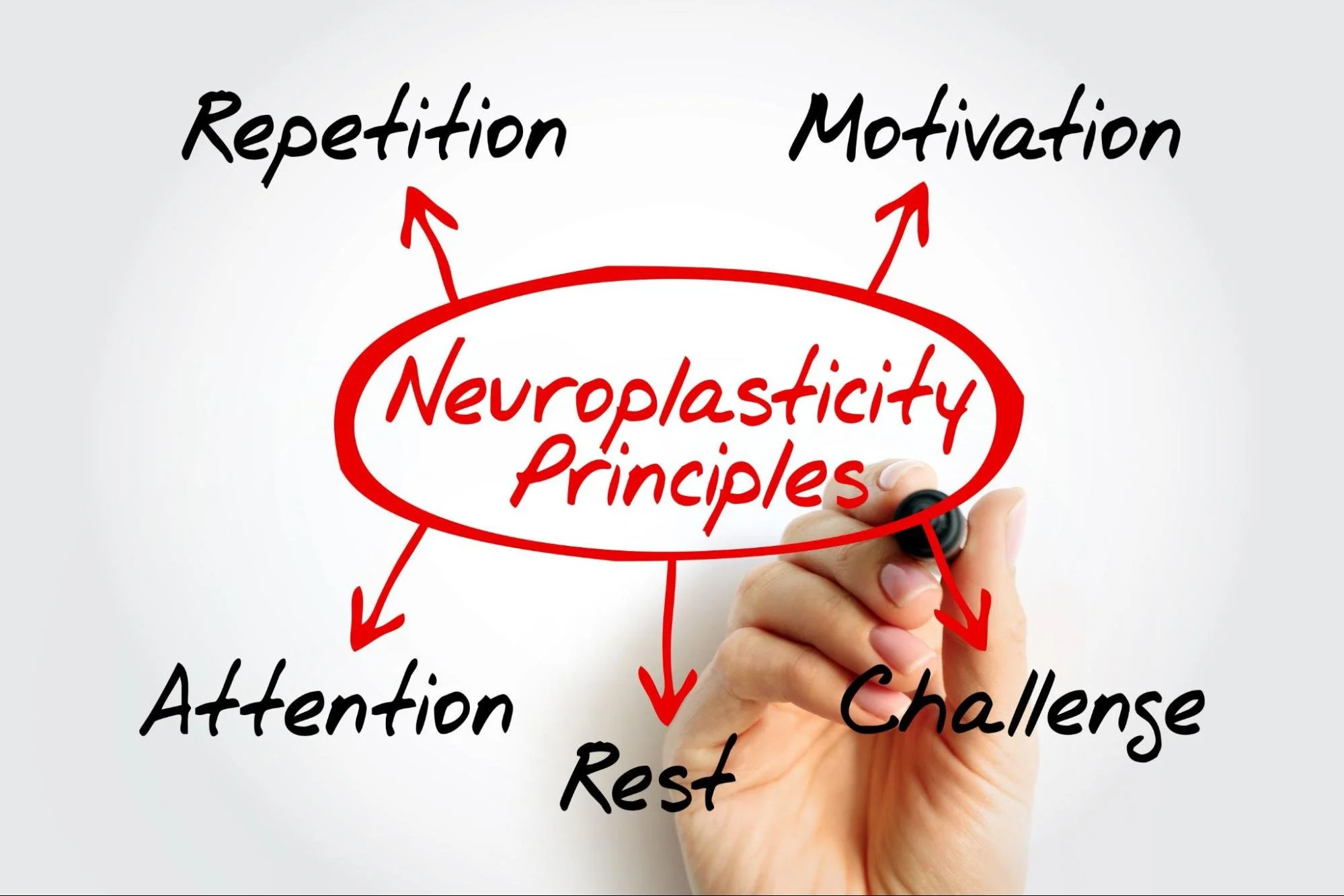
Dr. Jessica Knape of HealthSpan Internal Medicine in Boulder, CO, explains how modern neuroscience and functional medicine show that dementia and cognitive decline are not always irreversible. She highlights how metabolic and inflammatory imbalances can be stabilized or improved by leveraging neuroplasticity and targeted, brain-supportive interventions.
For decades, dementia was considered inevitable and irreversible — a slow decline of memory and independence.
But new research in neuroscience, functional medicine, and longevity science tells a different story: the brain can repair itself under the right conditions.
At HealthSpan Internal Medicine in Boulder, CO, we see cognitive decline not as a one-way path but as a metabolic and inflammatory imbalance that can be stabilized — and in some cases, meaningfully improved — through the principles of neuroplasticity.
HealthSpan Insight
Neuroplasticity is the brain’s ability to rewire, adapt, and grow new connections.
Lifestyle, hormones, sleep, and mindset all influence how plastic (or rigid) the brain becomes.
While advanced dementia can’t be fully reversed, early and moderate stages can show measurable recovery through targeted intervention.
Connection, learning, and movement are the brain’s best medicine.
1. What Is Neuroplasticity?
Neuroplasticity means your brain is alive and adaptable.
It can form new synapses (connections between neurons), strengthen old ones, and even grow new cells — a process known as neurogenesis.
Every thought, movement, and emotion reshapes the physical structure of your brain.
Even in older adults, the hippocampus — the memory center — continues to generate new neurons, especially when stimulated by learning, exercise, and purpose.
Neuroplasticity explains why recovery is possible — and why decline accelerates when the brain is underused or inflamed.
2. The Brain Is a Metabolic Organ
Your brain is the most energy-hungry tissue in your body.
When metabolism falters — through insulin resistance, inflammation, poor sleep, or chronic stress — neurons don’t get enough energy to function.
This leads to what researchers call “Type 3 Diabetes” or metabolic Alzheimer’s disease — a state where glucose can’t enter brain cells efficiently.
Without energy, synapses weaken, and communication breaks down.
The encouraging news: when metabolic health is restored, neurons can recover function.
In clinical trials, diet, exercise, and sleep optimization have improved cognitive scores by 20–40% in mild cognitive impairment (MCI).
3. The Ingredients of Brain Repair
Neuroplasticity doesn’t happen by accident — it requires specific inputs:
A. Oxygen and Blood Flow
Exercise, breathwork, and posture all increase cerebral circulation, delivering oxygen and nutrients vital for brain growth.
B. Energy and Mitochondria
Healthy mitochondria fuel the brain’s electrical signals. Nutrients like magnesium, CoQ10, omega-3s, and NAD+ precursors help neurons regenerate efficiently.
C. BDNF (Brain-Derived Neurotrophic Factor)
BDNF is like “fertilizer” for neurons — it supports synapse formation and resilience. Exercise, fasting, and mindfulness all raise BDNF levels naturally.
D. Learning and Novelty
Challenging the brain with new activities (languages, instruments, puzzles, or even dancing) keeps neural circuits flexible.
The brain grows through use and challenge, not repetition.
E. Emotional Safety and Connection
Positive relationships and belonging increase oxytocin and serotonin, which protect neurons from stress-induced damage.
F. Sleep
Deep sleep activates the glymphatic system, which removes waste proteins (like beta-amyloid) from the brain — literally cleansing it every night.
4. Can Dementia Be Reversed?
In advanced stages of Alzheimer’s or vascular dementia, full reversal is not currently possible — but slowing, stabilization, and partial recovery are achievable.
Programs that combine metabolic optimization, toxin reduction, hormone balance, and cognitive training (such as the Bredesen Protocol) have documented cases of significant improvement.
Patients who once struggled with names, navigation, or planning often regain those abilities once inflammation is reduced and neuroplasticity is reactivated.
Even modest gains — sharper focus, better mood, improved sleep — are signs of renewed brain vitality.
5. What Helps Stimulate Neuroplasticity?
A. Movement (Especially Aerobic and Coordination Training)
Increases blood flow and BDNF.
Strengthens brain-body communication via the cerebellum.
Improves executive function and processing speed.
B. Mindful Breathing and Meditation
Lowers cortisol and increases gray matter in the hippocampus.
Enhances attention and emotional regulation.
C. Nutrition and Metabolic Reset
Adopt a low-glycemic, anti-inflammatory diet (like KetoFlex 12/3).
Include omega-3s, colorful vegetables, olive oil, and polyphenols.
Time-restricted eating improves mitochondrial repair.
D. Cognitive Training
Learn something new: a skill, game, or instrument.
Novelty triggers synaptic growth more effectively than repetition.
E. Social and Emotional Engagement
Conversation, empathy, and laughter activate neural networks involved in memory and reward.
Community events, volunteering, and shared meals strengthen cognitive reserve.
6. The Power of Community in Healing the Brain
Isolation accelerates decline; connection slows it down.
Studies show that people with strong social ties have better cognitive outcomes and 50% lower dementia risk.
Social engagement stimulates brain regions tied to empathy, language, and executive function — essentially giving your brain a daily workout.
At HealthSpan, we see that connection also improves compliance and hope.
When patients feel supported, they’re more likely to maintain healthy habits that drive neuroplastic repair.
Healing happens in relationship — to others, to purpose, and to self.
7. Mindset: The Brain’s Secret Multiplier
Your beliefs about aging matter.
People who view aging as a process of continued growth and learning show larger hippocampal volumes and slower cognitive decline.
Every time you think, “I can improve,” you activate reward and motivation circuits that enhance neuroplasticity.
The mind’s story literally becomes the brain’s biology.
8. The HealthSpan Approach to Brain Repair
Our Brainspan Blueprint combines the best of modern science and ancient wisdom:
Comprehensive metabolic and inflammatory testing.
Hormone and nutrient optimization.
Movement, posture, and breathwork training.
Stress and sleep restoration.
Cognitive and emotional re-engagement through purpose and community.
By addressing both the chemistry and the context of brain health, we help patients not just slow decline — but rediscover clarity, creativity, and connection.
Bottom Line
Dementia is not simply the loss of memory — it’s the loss of connection, energy, and adaptability.
Through neuroplasticity, many of those pathways can be rebuilt.
While we can’t turn back time, we can teach the brain to relearn vitality — one thought, one breath, and one connection at a time.
At HealthSpan Internal Medicine, we help patients activate neuroplasticity as the foundation of lifelong brainspan — the years your brain stays clear, creative, and fully alive.
Schedule a Brain & Cognitive Optimization Evaluation with Dr. Knape to assess your neuroplasticity potential, cognitive status, and personalized strategies — including physical, mental, and lifestyle-based interventions — to preserve brain function and enhance resilience through aging.
Ready to take action for your brain health?
👉 Join the 12-week Brainspan Bootcamp and start building lifelong brain resilience
Sources
Study on brain plasticity & cognitive exercise in Alzheimer’s models — Frontiers
Non-pharmacological interventions & neuroplasticity in early Alzheimer’s — PubMed
Neuroplasticity as a therapeutic target to slow dementia progression — PubMed
“Neuroplasticity could transform dementia treatment” — MDLinx
Medically reviewed by
Dr. Jessica Knape, MD, MA Board Certified in Internal Medicine and Integrative and Holistic Medicine
Healthspan Internal Medicine — serving patients in Boulder, CO
Book a Discovery Call | About Dr. Knape
This content is for educational purposes and does not replace personalized medical advice.
